I thought it was about time I did another misconceptions and questions post. To fix some errors and answer some questions I have received recently. Here are 15 short misconceptions and questions I have either come across recently or regularly.

Showing posts with label gravedigger. Show all posts
Showing posts with label gravedigger. Show all posts


2012-06-04
Funeral Fun - Broken down in the cemetery
A breakdown is never a fun thing. Especially in the funeral industry. Even more so in a cemetery during a funeral! But this is exactly what happened one hot summer day.
This is the story of how our hearse broke down in a cemetery, during a funeral, and how a gravedigger came to our rescue.
This is the story of how our hearse broke down in a cemetery, during a funeral, and how a gravedigger came to our rescue.
2012-05-30
Funeral Fun - Emptying the crypt
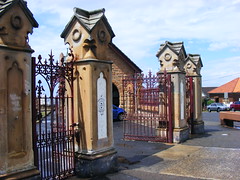 |
| Gates into Waverley Cemetery. |
Basically the job was to move five coffins in a crypt so it could be renovated. I had never been in a crypt before but had heard stories. People described them as dark, damp, dirty, small, boring and slippery. So I was actually rather excited and looking forward to it.
The day before we took the stretchers out of the transfer van and filled it with things we might need. Such as boards, ropes, torches and so on. Just a variety of things that might be handy if needed. I was put in the van and sent on a funeral first. This meant I had to bring a more 'practical' set of cloths as my three piece funeral suit would not be suitable for pulling coffins out of a crypt.
After the funeral I made my way over to Waverley Cemetery where the crypt was. As usual I was the first to arrive and so I had plenty of time to sit and eat my lunch. After all I would soon need my energy. I sat near the gate so that it was in sight but I was hidden. It was starting to turn into a miserable day, it was cold, overcast and looked like rain. Hardly the sort of weather we wanted.
Not too much later everyone else started to arrive and we made our way to the crypt. As they set up I changed into the more suitable work clothes. It had started to spit rain very lightly and then stopped, I remember one of the other undertakers commenting that he hopped the rain would keep away, even for a little bit.
When they had opened the door and set up we went inside to assess the situation. The job involved taking four adult coffins and one baby coffin off shelves and then taking them down one level into a room underneath the crypt. Unfortunately the door to the basement room under the crypt was directly infront of the door to the crypt itself and actually very small. It was not so much a 'door' as a small and steep hole with some stairs. Even better this hole was right in front of the door to the upper level. So we had to cover it up with boards to be able to get in and out of the upper level. Then we would have to uncover it to get to the bottom level.
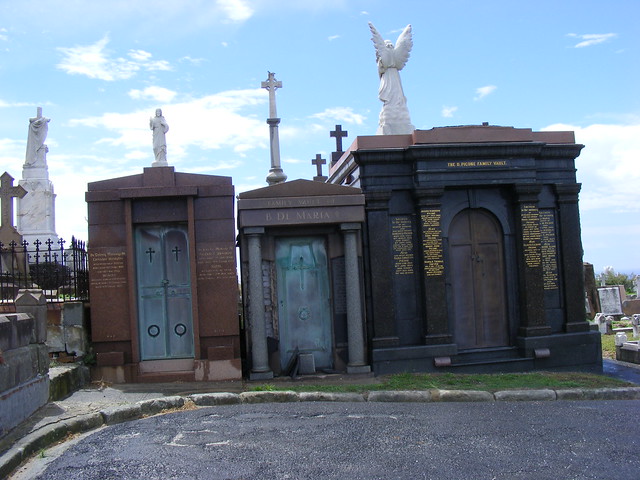 |
| Three crypts at Waverley, the one of the right is very similar to the one we worked out of. |
And there were only four of us. The grave diggers were not allowed to help due to OH&S issues. They obviously felt sorry for us and helped how they could, in fact a couple got quite actively involved. But they were council employees and council diggers cannot by law do certain things. Such as move coffins (like lowering or carrying them) and so on. All due to OH&S and insurance issues.
But what could we do? There were only four of us and the poor family had waited months for the job to be done. But our boss had been putting it off. And a family member was present through the job, he was obviously very upset at seeing his family being moved about but he was also extremely grateful.
We set to work and moved the two easiest coffins out first. I remember thinking how difficult it was, that these two coffins were so heavy and how little room there was. Little did I know that this would be the easiest part of the job. After taking the two coffins out we loaded them into the back of the van. Then we uncovered the hole to the bottom level and started to take the coffins down.
Here was the trouble, the hole was just big enough to fit the coffins and very step. We had to tie the coffin with rops, lower it foot first down the hole, then send the smaller person to squeeze between the coffin and the hole and direct it as the others continued to lower. Guess who was the 'smaller' person, me! I was to squeeze myself down the hole and direct the coffin until there was enough room for the others to come down and help me.
This is how we got the first coffin into the room. But then we had to get it on a shelf. Because of the lack of room and steepness of the hole we could barely raise the foot end of the coffin to get it onto the shelf. It kept getting caught on the walls, and with its heavy weight we had a lot of trouble. But we did it, the first two coffins were on the shelves and done.
Now it got hard. The next two coffins were bigger, heavier, had no handels and were higher. We lifted them up onto sticks while still on the shelves, then we tied ropes around them. Next I climbed up to the top shelf of the crypt (which had nothing on it except debris and dirt). I had to lie on this shelf as it was close to the roof and then take a rope to help swing the coffin out. So there I lay, in the dirt on a cold shelf in a crypt. All while swinging a heavy coffin down.
With a lot of trouble and effort we got the last two coffins out. But they were larger, so getting them down the hole was more difficult. I remember at one point another undertaker getting his pants caught on the coffin as he tried to squeeze past it to get down the hole. It was quite funny actually, seing him stuck there by his pants to a coffin! Even he thought it was funny. But then the supervisor reminded us that the family was watching and we had to stop giggling.
In the end we got the job done, but it was very dirty and a lot of work. When we finished the family member thanked us all personally, he was very grateful for the job and thought we had done well. And I had so much fun doing it, we all did. As difficult and dirty as it was it was also very rewarding and seing the job finished was so satisfying. I really enjoyed the day and the job with good people.
~~
2012-04-02
The Dangers of Gravedigging
Cemeteries are not chosen for their good soil. Most are just clay or sand or a mix of the two. In any case this makes them terrible to work with.
Gravedigging is actually a rather dangerous job. In dry weather at Eastern Suburbs Memorial Park (ESMP), also known as Botany Cemetery, the sand is very fine and lose. As a result they often cannot use machinery and have to dig the grave by hand. This means they have to get into the grave and dig with shovels. They also have to board up the sides to prevent the grave collapsing (which is quite common due to the lose sand). However the sand still pours through even the tiniest of gaps. Worse is that if they bump the board or if it is simply not secured properly then the whole side can come crashing down on the diggers. There have been a few close calls over the years but luckily no serious injuries or issues. The diggers at ESMP pray for rain as it binds the sand and prevents it moving about so easily, however too much rain and the sound is liable to move about.
Digging is just as dangerous in the wet, if not more so at certain cemeteries. At Rookwood for example the soil is made up of a sticky and slippery clay. The digger trucks at this cemetery are just covered with the clay both inside and outside. From the steering wheel to the door handles the once white trucks are perfect brown. Also at these places if they cannot dig with a machine (such as with memorial or difficult to reach graves) then they have to do it by hand. This is incredibly difficult and can take days to dig a single grave.
Another issue is in the weather itself, diggers work outside in any and all conditions. They will work outside even on the hottest days in summer where the temperature is over 40c and there is no shade or wind to cool them. Something they have to watch for is being burnt. Anything metal left in the sun on these days becomes so hot it will burn on contact. So all their shovels and other tools with metal part, the grave covers which have metal handles and so on can burn them if not careful. A fairly common health issue for diggers is skin cancer, after talking with several over my time I found many who either had a skin cancer removed or knew a co-worker who had one removed. Even though they used sun-screen and wore hats the amount of time in the Australian sun took its tole. A less common issue with
Grave collapses are an unavoidable occurrence. If you are at a funeral and the grave has fake grass down both or one side it means that the grave collapsed. In these cases you can often see the coffin, or very very rarely the body, in the next grave. When this happens the diggers will spray a dis-infectant which smells like odd bubblegum. They will also put out the seats down-wind of the grave (for obvious reasons as the smell is rather unpleasant). So again, if you see fake grass, smell strange bubblegum and the seating is in an unexpected spot it means that the grave has collapsed the coffin next to it is exposed.
There is very little the diggers can do to prevent or lessen this. I remember one digger telling me how as they dug the graves on one side kept collapsing and falling into the original grave. The more they dug out the more that fell in and in the end over four graves along had collapsed into the original grave. He said it was because of the rain, it had rained heavily over the last few days and the ground had moved about.
Water in the grave is another issue for diggers. It makes digging the grave difficult and then the family are often unhappy with the sight of water in the grave. Sometimes it is so bad that the coffin will float when lowered which can really upset certain families. Unfortunately the funeral directors get the blame, even though they had nothing do do with the grave, or the diggers get the blame, even though there is nothing they can do. At some cemeteries (such as Forest Lawn) once you dig to a certain depth you hit the water table. So if the family order a deep grave then no matter what there will be water in the bottom. Again this is an issue with it rains as due to the slope of many graveyards the water will pour into the grave.
One digger told me about how this happened on one of his jobs. It was raining so hard that there was (as he put it) a waterfall flowing down the side of the grave. They had two pumps working constantly but it was slowly filling up. This is not normally a problem as most families will undertand, but in this case the deceased had died by accidental drowning. So they were extremely upset with the idea of his coffin being lowered into water. In the end the funeral had to be postponed and the poor digger coped a lot of blame.
In the end the diggers are usually really nice people who work very hard. Often they go above and beyond their duties to help families and funeral staff. I remember one digger who helped us change a tire on a hearse in his own time. Unfortunately they also earn too little being paid only minimum wage, as do most in the industry. So perhaps throw them a small tip, offer them a cold water, or at least thank them for their work.
~~
2012-03-24
Funeral Fun - The Gloved Man & Stolen Flowers

2012-03-12
How We View the Undertaker & Why Many Deny the Job
Funeral directors get a lot of different and often strong reactions when telling people their occupations. In fact many funeral directors I talked with admitted that they had lied about or avoided the topic of their job at least once. They are not ashamed of what they do, no, they are actually often quite proud. However they feel others would likely judge them for doing the work they do.
This is not an unfounded notion. For example take a moment to think of 'funeral director' or 'undertaker'. One will usual conjure an image of a strange guy in a dark suit and oddly wearing a top hat, a person who is odd in nature and a little creepy. To further this google "undertaker" and you will find, strangely enough, the top images are of a wrestler. His clothing and appearance is dark, wearing a brimmed black hat and usually shown as dimly lit and with fog. Search "funeral director" and we find more images of various people in dark suits; many of whom are walking in front of or next to a hearse. Although many of them are smiling most of them are lacking colour or warmth. Looking for "embalmer" or "mortician" we get images of people in a mortuary, usually over a steel table, posing with tools or performing a procedure. All of these images are cold, the tiled walls, the vapid colours and the lack of expression on the persons face. There is rarely any colour other than hospital green and no smiling in any of these photos.
It is clear that searching for funeral people or related positions results in almost negative results. But we might doubt this is representative of the general public. After all, search for "archaeology" and the top hit is of Indiana Jones swinging his whip. However I very much doubt this would be the first thought for most people when they think of archaeology. So it is not much of a leap to assume that the google results for funeral professional images would not be too smilar to what people think of funeral professionals.
Yet this is not the case, people do think of strange things when thinking of undertakers. Undertakers have just cause for 'hiding' what they do for a living from others. A common reaction I and others in the industry have experienced is "I couldn't do that". This is one of the first things a few have said to me, and something several in the industry said they have heard. As if the job is for very few and definitely not for them. In saying this most are referring to what they perceive as a difficult job, both in terms of being dirty and emotional.
Lets break down this idea of it being a dirty job. What is strange is that it is usually less dirty a job than what a nurse, doctor or carer would have. The closest undertakers get to the body is putting the deceased in a bag and then later putting clothes on them. There is little actual contact with a body, less than for many carers. Yet it is considered more dirty than other jobs by most people. But not just dirty, it is also seen as grose and unclean. A nurse deals with the living, an undertaker deals with the dead and just this fact makes the job more dirty. I have been questioned about the 'quality' of bodies, how they decompose and how fast they decompose. A few people have said how the job must be bad at times commenting that bodies decompose fairly fast. What they do not realise is that the funeral industry is an old and experienced one. Bodies are preserved in a special fridge. People have an idea that the job involves dealing with decomposing bodies constantly. These questions and ideas lead to the notion that the process of touching a body, let alone interacting with 'it' is dirty. I have also been asked about "the smell of death", which does not exist, the closest thing is the smell of the embalming chemicals. Their scent would cling to clothing, and some people did comment on the odd smell. But it is closer to a chemical smell than a 'scent of death'. The very idea that death can have a smell, and that undertakers would be use or exposed to it is interesting. Death itself has a presence, which lingers on those who associate themselves with it. In other words this dirtiness of the body (in this case the smell) clings to those who work with bodies. It follows them home and stays with them. Basically to many the act of touching a body is dirty in itself, but also that this dirtiness transfers to those who touch the body.
The emotional difficulty is also something some raise. Just recently I had someone say "it must be emotionally hard". That undertakers have a depressing job in dealing with the depressed living and dealing with the dead. Many think of a funeral as a sad and fairly depressing affair. We turn once again to our friend google to look for images of "funeral". What comes up are pictures, usually void of colour and just black and white of people standing around a coffin in a cemetery. The people are often crying or looking sadly at the coffin as it is either carried or lowered. What I found is that many funerals, while sad in a way, are a 'celebration' of the departed. People did not linger on the negatives of their loss but clung to the positives of their impact on those left behind. Of the good times they had and the good memories they will keep. However, to be perfectly honest, most funerals are more an excuse to have lunch while catching up with relative otherwise rarely seen. I was primarily a 'family car driver', which involved driving around the close family and/or friends of the deceased on the funeral. These families or friends were rarely depressed or difficult. Actually most were actually really fun and great people, and we often had a great time together. So funerals, and those attending, are not really emotionally difficult or draining in most cases. As for dealing with death and bodies this is not an issue. Not to sound cold but you will get use to it after a couple of bodies. Medical professionals who treat and work with patients have more trouble with 'death' or 'bodies than funeral directors. For example at some nursing homes where the staff focused on or spent a lot of time with patients they were sad to see them die. These nurses would often be involved in the transfer if they could, wanting to oversee the paperwork and the process. In doing so they would quietly or silently say their goodbyes to the patient. However the funeral director did not know the deceased in anyway other than them being deceased. Thus there is less emotional connection, simply put it is not personal. Having said that children or babies were different, especially to parents and more so if the deceased reminded them of their own child. While funerals were rarely a sad event, more often being closer to a family gathering, the children's funerals were different. They were not 'sad' or 'depressing' but were much more tense. Everything was more important, everything was more observed and everything had to go perfectly. Appart from children or infants overall I found being an undertaker was emotionally less difficult than working on a cash register.
There was once instance that was surprising to me. I had driven an older man, his wife and their first daughter on a funeral. The relation they had to the deceased I cannot remember. Either way the job had gone well and despite the husband and wife's lack of English we had a good time. We had a good time and everything had gone well. Then about six weeks later I was sent to an address that appeared familiar. upon arrival I recognised the place. It turned out that the husband had died and I was now driving his wife and all three daughters. Overall it was a really enjoyable job, the wife (still lacking English) obviously appreciated me being there again. We again had a good day, although now it had a slightly sad atmosphere to it. This was the closest I ever came to an emotional connection.
So people unreasonably see it as a dirty, emotionally negative job. But this is not enough for those in the industry to hide their occupation. The main reason for this is that a few people judge those with the job negatively. It is rare and I only experienced it once, yet it happens and especially with older or Asian people. Once they find out that the person is a funeral director they want little to do with that person. Mainly as they see it as dirty and that not only does this dirtiness follow the undertaker home but it makes the undertaker themselves dirty. Yes, some believe undertakers to be dirty or contaminated, marked by death and disease. Look at certain Asian cultures (such as those who are Buddhist, Indian or Chinese) who consider those in the funeral industry to be untouchable and the lowest class possible. A good example is the movie 'Departures' where a Japanese man discovers his calling in the funeral industry after he is unable to find any other work. At first he is reluctant and fights the idea of being an undertaker, only doing so as he is desperate for work. And when his wife finds out she leaves him. To certain groups being a funeral director is not just dirty but also wrong.
Many, especially those who are older or Asian, would react badly to the news of one being a funeral director. Even if they do not react badly, they often react inappropriately or are uneasy with the news. Thus many undertakes have avoided or actively lied about what they do for a living. All despite most being proud of what the job and understanding that, while it is not dirty or emotion, that most people will view it this way.
~~
This is not an unfounded notion. For example take a moment to think of 'funeral director' or 'undertaker'. One will usual conjure an image of a strange guy in a dark suit and oddly wearing a top hat, a person who is odd in nature and a little creepy. To further this google "undertaker" and you will find, strangely enough, the top images are of a wrestler. His clothing and appearance is dark, wearing a brimmed black hat and usually shown as dimly lit and with fog. Search "funeral director" and we find more images of various people in dark suits; many of whom are walking in front of or next to a hearse. Although many of them are smiling most of them are lacking colour or warmth. Looking for "embalmer" or "mortician" we get images of people in a mortuary, usually over a steel table, posing with tools or performing a procedure. All of these images are cold, the tiled walls, the vapid colours and the lack of expression on the persons face. There is rarely any colour other than hospital green and no smiling in any of these photos.
It is clear that searching for funeral people or related positions results in almost negative results. But we might doubt this is representative of the general public. After all, search for "archaeology" and the top hit is of Indiana Jones swinging his whip. However I very much doubt this would be the first thought for most people when they think of archaeology. So it is not much of a leap to assume that the google results for funeral professional images would not be too smilar to what people think of funeral professionals.
Yet this is not the case, people do think of strange things when thinking of undertakers. Undertakers have just cause for 'hiding' what they do for a living from others. A common reaction I and others in the industry have experienced is "I couldn't do that". This is one of the first things a few have said to me, and something several in the industry said they have heard. As if the job is for very few and definitely not for them. In saying this most are referring to what they perceive as a difficult job, both in terms of being dirty and emotional.
Lets break down this idea of it being a dirty job. What is strange is that it is usually less dirty a job than what a nurse, doctor or carer would have. The closest undertakers get to the body is putting the deceased in a bag and then later putting clothes on them. There is little actual contact with a body, less than for many carers. Yet it is considered more dirty than other jobs by most people. But not just dirty, it is also seen as grose and unclean. A nurse deals with the living, an undertaker deals with the dead and just this fact makes the job more dirty. I have been questioned about the 'quality' of bodies, how they decompose and how fast they decompose. A few people have said how the job must be bad at times commenting that bodies decompose fairly fast. What they do not realise is that the funeral industry is an old and experienced one. Bodies are preserved in a special fridge. People have an idea that the job involves dealing with decomposing bodies constantly. These questions and ideas lead to the notion that the process of touching a body, let alone interacting with 'it' is dirty. I have also been asked about "the smell of death", which does not exist, the closest thing is the smell of the embalming chemicals. Their scent would cling to clothing, and some people did comment on the odd smell. But it is closer to a chemical smell than a 'scent of death'. The very idea that death can have a smell, and that undertakers would be use or exposed to it is interesting. Death itself has a presence, which lingers on those who associate themselves with it. In other words this dirtiness of the body (in this case the smell) clings to those who work with bodies. It follows them home and stays with them. Basically to many the act of touching a body is dirty in itself, but also that this dirtiness transfers to those who touch the body.
The emotional difficulty is also something some raise. Just recently I had someone say "it must be emotionally hard". That undertakers have a depressing job in dealing with the depressed living and dealing with the dead. Many think of a funeral as a sad and fairly depressing affair. We turn once again to our friend google to look for images of "funeral". What comes up are pictures, usually void of colour and just black and white of people standing around a coffin in a cemetery. The people are often crying or looking sadly at the coffin as it is either carried or lowered. What I found is that many funerals, while sad in a way, are a 'celebration' of the departed. People did not linger on the negatives of their loss but clung to the positives of their impact on those left behind. Of the good times they had and the good memories they will keep. However, to be perfectly honest, most funerals are more an excuse to have lunch while catching up with relative otherwise rarely seen. I was primarily a 'family car driver', which involved driving around the close family and/or friends of the deceased on the funeral. These families or friends were rarely depressed or difficult. Actually most were actually really fun and great people, and we often had a great time together. So funerals, and those attending, are not really emotionally difficult or draining in most cases. As for dealing with death and bodies this is not an issue. Not to sound cold but you will get use to it after a couple of bodies. Medical professionals who treat and work with patients have more trouble with 'death' or 'bodies than funeral directors. For example at some nursing homes where the staff focused on or spent a lot of time with patients they were sad to see them die. These nurses would often be involved in the transfer if they could, wanting to oversee the paperwork and the process. In doing so they would quietly or silently say their goodbyes to the patient. However the funeral director did not know the deceased in anyway other than them being deceased. Thus there is less emotional connection, simply put it is not personal. Having said that children or babies were different, especially to parents and more so if the deceased reminded them of their own child. While funerals were rarely a sad event, more often being closer to a family gathering, the children's funerals were different. They were not 'sad' or 'depressing' but were much more tense. Everything was more important, everything was more observed and everything had to go perfectly. Appart from children or infants overall I found being an undertaker was emotionally less difficult than working on a cash register.
There was once instance that was surprising to me. I had driven an older man, his wife and their first daughter on a funeral. The relation they had to the deceased I cannot remember. Either way the job had gone well and despite the husband and wife's lack of English we had a good time. We had a good time and everything had gone well. Then about six weeks later I was sent to an address that appeared familiar. upon arrival I recognised the place. It turned out that the husband had died and I was now driving his wife and all three daughters. Overall it was a really enjoyable job, the wife (still lacking English) obviously appreciated me being there again. We again had a good day, although now it had a slightly sad atmosphere to it. This was the closest I ever came to an emotional connection.
So people unreasonably see it as a dirty, emotionally negative job. But this is not enough for those in the industry to hide their occupation. The main reason for this is that a few people judge those with the job negatively. It is rare and I only experienced it once, yet it happens and especially with older or Asian people. Once they find out that the person is a funeral director they want little to do with that person. Mainly as they see it as dirty and that not only does this dirtiness follow the undertaker home but it makes the undertaker themselves dirty. Yes, some believe undertakers to be dirty or contaminated, marked by death and disease. Look at certain Asian cultures (such as those who are Buddhist, Indian or Chinese) who consider those in the funeral industry to be untouchable and the lowest class possible. A good example is the movie 'Departures' where a Japanese man discovers his calling in the funeral industry after he is unable to find any other work. At first he is reluctant and fights the idea of being an undertaker, only doing so as he is desperate for work. And when his wife finds out she leaves him. To certain groups being a funeral director is not just dirty but also wrong.
Many, especially those who are older or Asian, would react badly to the news of one being a funeral director. Even if they do not react badly, they often react inappropriately or are uneasy with the news. Thus many undertakes have avoided or actively lied about what they do for a living. All despite most being proud of what the job and understanding that, while it is not dirty or emotion, that most people will view it this way.
~~
2012-03-09
Falling in the Rain
Yesterdays bad weather reminded me of an amusing event one rainy day. It was raining very hard and had been all week. I was on a small funeral with a burial in Rookwood, a place famous for its sticky clay and slippery puddles. But I actually had no issues with this as I was well and truly use to it.
When we arrived at Rookwood and all jumped out of the hearse I noticed the conductor had tucked his pants into his socks. It was a really odd look, his pants were all puffed out at the base like parachute pants from the 90s. I just stared at him, shocked and amused. He let out a proud and humble grin as though he thought I was marvelling at his new look. Then he said that yes, he looked like a clown but at least his pants would not get dirty. Each to their own I guess. It was a rather strange look, his little socks then the puffy pants.
The hearse driver said something about how he would not need to do that as he simply wouldn't step in the mud. And I believed him as he had a habit of keeping clean no matter the circumstances. Actually earlier that morning I had been talking to the hearse driver about his shoes. No matter the conditions of the day I had noticed he always came back to the office with clean shiny shoes. While everyone else was scrapping mud off their pants and shoes he was always clean. And yet it was not as though he avoided work or dirt. I never saw him avoid getting his hands dirty, he simply walked away clean.
However he would not be so lucky on this funeral. A few moments after getting out of the hearse the hearse driver was carrying a small basket of petals over to the grave. I watched as he made his way across the muddy landscape when suddenly and unexpectedly one of his feet sank and petals went flying everywhere. He had stepped on the side of a fresh grave and due to being a solid guy the dirt just sank down.
The gravedigger and I started laughing uncontrollably, it was so funny; there was the big ex-army guy who normally walked with such sureness and poise suddenly stumbling sideways, chased by a cloud of petals. The hearse driver came over to us, less than impressed but able to see the funny side. That is when we saw he had sunken just past his ankel, getting a little sandy mud inside his shoe as well as all over it.
~~
When we arrived at Rookwood and all jumped out of the hearse I noticed the conductor had tucked his pants into his socks. It was a really odd look, his pants were all puffed out at the base like parachute pants from the 90s. I just stared at him, shocked and amused. He let out a proud and humble grin as though he thought I was marvelling at his new look. Then he said that yes, he looked like a clown but at least his pants would not get dirty. Each to their own I guess. It was a rather strange look, his little socks then the puffy pants.
The hearse driver said something about how he would not need to do that as he simply wouldn't step in the mud. And I believed him as he had a habit of keeping clean no matter the circumstances. Actually earlier that morning I had been talking to the hearse driver about his shoes. No matter the conditions of the day I had noticed he always came back to the office with clean shiny shoes. While everyone else was scrapping mud off their pants and shoes he was always clean. And yet it was not as though he avoided work or dirt. I never saw him avoid getting his hands dirty, he simply walked away clean.
However he would not be so lucky on this funeral. A few moments after getting out of the hearse the hearse driver was carrying a small basket of petals over to the grave. I watched as he made his way across the muddy landscape when suddenly and unexpectedly one of his feet sank and petals went flying everywhere. He had stepped on the side of a fresh grave and due to being a solid guy the dirt just sank down.
The gravedigger and I started laughing uncontrollably, it was so funny; there was the big ex-army guy who normally walked with such sureness and poise suddenly stumbling sideways, chased by a cloud of petals. The hearse driver came over to us, less than impressed but able to see the funny side. That is when we saw he had sunken just past his ankel, getting a little sandy mud inside his shoe as well as all over it.
~~
2012-03-02
Misconceptions & Questions - Part 2
This is the second post of misconceptions and questions I have found about the funeral industry.
Misconceptions & Questions - Part 1
Misconceptions & Questions - Part 3
Complete List of misconceptions & questions
- Has anyone ever been buried / cremated alive or woken up in a mortuary?
I do not know for sure, but I doubt it. The body is kept in a fridge which is between 3-5C. Too cold for anyone to survive long, especially on a metal or plastic tray and without clothes. So even if someone did go into a mortuary alive (which I doubt would happen) they would never wake up.
- What is rigor mortise and can you get rid of it?
Rigor mortise is basically a stiffening of the limbs. The joints become difficult to bend, this does not happen with all bodies, in fact it does not even happen in most. The way it is gotten rid of is through a process called "breaking the rigor mortise". Basically you bend the limbs back and forward a few times and the joints will losen up. This 'breaks' the stiffness and the body is back to normal.
- Is everybody embalmed?
No, in fact very few people are embalmed in Australia (unlike America or New Zealand where it is basically mandatory). Generally it is only done if needed for interstate or international transfers or if the body is going into a vault. There are several types of embalming ranging from ‘TP’ which is a temporary embalm used for preservation on long distance transfers. Then there is the ‘full embalm’ which can preserve a body indefinitely. Used mainly for those wishing to go in a vault or other special circumstances this is the real embalming dating back at least as far as the Egyptians.
- How long does it take to embalm a body?
There are several types of ‘embalming’ from the temporary ones to transfer them interstate or internationally to the full embalm to preserve the body for a long time. It will usually take about three hours to fully embalm a person.
- Does it smell in the mortuary and / or do you smell after working in there?
Sometimes, it depends. As with cooking, it sometimes smells, other times it does not, it depends on what you are doing. Some bodies smell, either they have "leaked" out an end or they have decomposed or they just smell. Other times it is due to the chemicals used by the embalmer. It is also the chemical smell which can cling to clothing, not the smell of the body.
- How do you keep bodies?
All mortuary fridges are kept between 3 and 5 degrees celsius. Any colder and they begin to freeze which damages the body and makes it hard to work with. Any warmer and there will be obvious side effects (like rotting). I, and others, have noticed that certain fungi will grow on bodies kept in the fridge for long periods. It is either orange or white and not found anywhere else. Not even on similar bodies if they are out of the fridge for a long time, nor on the fridge itself. This fungi is just something that can only grow on a body when it is kept in a fridge.
- Do you 'reconstruct' the body?
Rarely will we do much more than put on clothes and suture the mouth shut or brush their hair. Funeral homes in Australia avoid delving into makeup and other methods to make the body look life like. This is because it is just so difficult to get right. The person may have worn a lot of makeup, or very little, we do not know. And going by a photo is difficult because colours are not always accurate. Hair styling is something they also shy away from. Getting it 'just right' or at least 'good enough' for families is so difficult. Undertakers are not hairdressers, they are not makeup artists, they are just workers ferrying the dead about. I have never seen a funeral home employ a hairdresser or makeup specialist, nor have I even hear of it.
- Have you seen 'Six Feet Under'?
This is perhaps the most known TV show about a funeral home. And it is a great show, well written, interesting rounded characters, etc. But it is not accurate of an Australian funeral home. For one we do not embalm many bodies (although it is becoming more common), we very rarely put makeup or anything similar on a body (even if it is for viewing) and we always wear gloves when handeling the deceased or even in the mortuary. On the show they have a lot more focus on 'fixing' the appearance of the deceased. Using special tools and chemicals to make them look like they are sleeping. In Australia we tend to just suture the mouth shut, put some eye-caps under the eyelids and nothing much else. ALso on that show they never wear gloves much. Here we must always put on gloves before we even enter the mortuary.
~~
2012-03-01
What is a Funeral Director?
What a funeral director or undertaker is may appear to be simple or obvious. But it is surprising how many people get it wrong. Unless they have been in or heavily around the industry many are quite wrong about = the industry. What our roles are, our responsibilities, what happens, who runs things and so on. Thus I have decided to put together a brief post about what a funeral director actually is. I will cover some other roles in the industry, but the focus is on funeral directors.
The public perspective is that the undertaker will organise the funeral, bring the coffin to the funeral, then to the grave or crematorium and that is basically it. This is fairly wrong. To start a 'funeral director' can mean and involve many different things. Once a mortician at a major hospital was telling me about the family of a deceased believing funeral directors were a rip off and un-necessary. As such they wanted to do everything themselves and save the thousands it costs to hire an undertaker. However he refused to release the body from the hospital as they did not have an appropriate vehicle. They had bought a station-wagon just for the job. But you need more than this, there are actual regulations and laws about what a vehicle needs to transfer a body, which a normal car does not meet. So they had the car modified specially, now it met the qualifications but he still could not release the body as they had incorrect papers. Then the family had issues with the cemetery. Finally they got a funeral director after much expense and waisted time. So obviously there is more to the role than just filling some forms and carrying a coffin.
I will break down the funeral director's role in order of action from beginning to end.
- Arranging the funeral: The arrangers are often experienced funeral directors who will go to the family's house and organise what they want on the funeral. From the coffin and flowers to printing the orders of service and buying the grave plot or booking the crematorium. They will book everyone and everything needed and just make sure it is all organised.
- Collecting the body: Firstly the funeral staff have to actually collect the body (through a process called a transfer). It could involve collecting the body from a hospital, crime scene, home, nursing home or just about anywhere else you can think of.
- Preparing the body: A lot of people have wishes for what they want done to their body when they die. And many are not willing or able to carry out these wishes on a loved one. This may involve just dressing the deceased in certain clothing. Or it could involve embalming the body for long-distance trips or for a crypt. The body is placed in the coffin in this stage as well.
- Driving: The hearse is long, big and heavy. It is best thought of as a small low truck or bus. And somebody has to drive it, after all, not many funerals do not have a hearse. While the hearse is almost always essential it is often not the only car used on the funeral. This is what a lot of people do not realise until they are involved in a funeral. Funeral directors also supply and often drive 'family/mourning cars' for close family and friends to travel in. It is basically a hire car driver role, not as much of a job as a real HC driver, but still very similar.
- Working the funeral: Although people see funeral directors at the funeral not many people actually look or remember the undertaker. The funeral staff often have light-hearted chats or jokes with the public, so it is not due to a 'morbid' or 'taboo' reasoning. Funeral staff will get people to sign the condolence book, carry the coffin, assist with the ceremony (religious or otherwise), direct people to the facilities such as toilets, help less mobile people in/out, direct people to parking if needed and much more. There is a lot going on behind the scenes on funerals, and the funeral directors do it all.
- Conducting the funeral: This is separate as it is a separate role and even position. Conductors get paid more and are responsible for everything on the day of the funeral. The rest of the funeral staff do not see them much, turning to the hearse driver instead. This is because the conductor will spend more time with the family or celebrant(s) and be unable to organise things out at the front of the funeral. But everything that happens on a funeral is ultimately the responsibility of the conductor.
- Carrying the coffin at the cemetery/crematorium: Sometimes people will carry on a funeral, however it is not something I would bet on with most funerals. Instead the funeral directors will carry the coffin about. However even if the family and/or friends do carry at the first part of the service they are unlikely to do so at the grave side of crematorium. They realise how heavy the coffin can be. How those handels, while pretty, are incredibly awkward and painful to hold. Then they look at the long, uneven and sometimes narrow distance needed to carry along. And they decline, falling quietly into the crowed. So yes, the funeral director will often end up carrying at some part of the service.
That is about it. There is more to the role, but nothing important or relevant. This is basically the job of a funeral director. Undertakes can however have less roles. By this I mean they can specialise, such as only doing transfers, or only doing mortuary work, or only driving the hearse.
There are many odd misconceptions surrounding the role of a funeral director. The most common is confusing funeral directors with grave diggers or crematorium staff. I was once told by a very strange man who I was driving on a funeral that he had a lot of ties with funeral directors. As a doctor he had met a lot, which is usually untrue, we do not meet many of the 'competition' in the health service unless it is in a mortuary. He also said that although this was the first funeral he had been to he talked with many funeral directors over the years. And that he knew we buried the bodies after the service at the grave so he would have time for a fe coffees while I buried his brother. I pictured myself, in my three piece suit, with a shovel in the middle of a grave. No matter how much I informed him otherwise he was convinced I would be the one to burry his brother. This is so wrong, the grave diggers burry the coffin. And they are qualified tradesmen/gardeners. You will see them at the cemetery with their workers fluro shirts or driving trucks. They have nothing to do with the body and we have nothing to do with it after the service.
~~
The public perspective is that the undertaker will organise the funeral, bring the coffin to the funeral, then to the grave or crematorium and that is basically it. This is fairly wrong. To start a 'funeral director' can mean and involve many different things. Once a mortician at a major hospital was telling me about the family of a deceased believing funeral directors were a rip off and un-necessary. As such they wanted to do everything themselves and save the thousands it costs to hire an undertaker. However he refused to release the body from the hospital as they did not have an appropriate vehicle. They had bought a station-wagon just for the job. But you need more than this, there are actual regulations and laws about what a vehicle needs to transfer a body, which a normal car does not meet. So they had the car modified specially, now it met the qualifications but he still could not release the body as they had incorrect papers. Then the family had issues with the cemetery. Finally they got a funeral director after much expense and waisted time. So obviously there is more to the role than just filling some forms and carrying a coffin.
I will break down the funeral director's role in order of action from beginning to end.
- Arranging the funeral: The arrangers are often experienced funeral directors who will go to the family's house and organise what they want on the funeral. From the coffin and flowers to printing the orders of service and buying the grave plot or booking the crematorium. They will book everyone and everything needed and just make sure it is all organised.
- Collecting the body: Firstly the funeral staff have to actually collect the body (through a process called a transfer). It could involve collecting the body from a hospital, crime scene, home, nursing home or just about anywhere else you can think of.
- Preparing the body: A lot of people have wishes for what they want done to their body when they die. And many are not willing or able to carry out these wishes on a loved one. This may involve just dressing the deceased in certain clothing. Or it could involve embalming the body for long-distance trips or for a crypt. The body is placed in the coffin in this stage as well.
- Driving: The hearse is long, big and heavy. It is best thought of as a small low truck or bus. And somebody has to drive it, after all, not many funerals do not have a hearse. While the hearse is almost always essential it is often not the only car used on the funeral. This is what a lot of people do not realise until they are involved in a funeral. Funeral directors also supply and often drive 'family/mourning cars' for close family and friends to travel in. It is basically a hire car driver role, not as much of a job as a real HC driver, but still very similar.
- Working the funeral: Although people see funeral directors at the funeral not many people actually look or remember the undertaker. The funeral staff often have light-hearted chats or jokes with the public, so it is not due to a 'morbid' or 'taboo' reasoning. Funeral staff will get people to sign the condolence book, carry the coffin, assist with the ceremony (religious or otherwise), direct people to the facilities such as toilets, help less mobile people in/out, direct people to parking if needed and much more. There is a lot going on behind the scenes on funerals, and the funeral directors do it all.
- Conducting the funeral: This is separate as it is a separate role and even position. Conductors get paid more and are responsible for everything on the day of the funeral. The rest of the funeral staff do not see them much, turning to the hearse driver instead. This is because the conductor will spend more time with the family or celebrant(s) and be unable to organise things out at the front of the funeral. But everything that happens on a funeral is ultimately the responsibility of the conductor.
- Carrying the coffin at the cemetery/crematorium: Sometimes people will carry on a funeral, however it is not something I would bet on with most funerals. Instead the funeral directors will carry the coffin about. However even if the family and/or friends do carry at the first part of the service they are unlikely to do so at the grave side of crematorium. They realise how heavy the coffin can be. How those handels, while pretty, are incredibly awkward and painful to hold. Then they look at the long, uneven and sometimes narrow distance needed to carry along. And they decline, falling quietly into the crowed. So yes, the funeral director will often end up carrying at some part of the service.
That is about it. There is more to the role, but nothing important or relevant. This is basically the job of a funeral director. Undertakes can however have less roles. By this I mean they can specialise, such as only doing transfers, or only doing mortuary work, or only driving the hearse.
There are many odd misconceptions surrounding the role of a funeral director. The most common is confusing funeral directors with grave diggers or crematorium staff. I was once told by a very strange man who I was driving on a funeral that he had a lot of ties with funeral directors. As a doctor he had met a lot, which is usually untrue, we do not meet many of the 'competition' in the health service unless it is in a mortuary. He also said that although this was the first funeral he had been to he talked with many funeral directors over the years. And that he knew we buried the bodies after the service at the grave so he would have time for a fe coffees while I buried his brother. I pictured myself, in my three piece suit, with a shovel in the middle of a grave. No matter how much I informed him otherwise he was convinced I would be the one to burry his brother. This is so wrong, the grave diggers burry the coffin. And they are qualified tradesmen/gardeners. You will see them at the cemetery with their workers fluro shirts or driving trucks. They have nothing to do with the body and we have nothing to do with it after the service.
~~
2012-02-12
Misconceptions & Questions - Part 1
Despite being in this industry for a little under a year I have encountered many misconceptions, strange questions and surprises from people. They range from the amusing to the absurd or even insulting. So here is a little list of the stuff I have encountered.
Misconceptions & Questions - Part 2
Misconceptions & Questions - Part 3
Complete List of misconceptions & questions
- What is a transfer vehicle?
The transfer vehicle is the car used to 'transfer' (pickup and transport) a body. This involves collecting the body from the hospital, from a nursing home, from the scene of an accident, from a personal residence/house, taking the body interstate and so on. The transfer vehicle is basically white van, often a Toyota Hicace.
Pictures of inside a transfer van
Explanation of the transfer
- The undertaker buries / cremates the body
No, never. The undertaker is a very different person to those who burry or cremate the body. The people who burry the body are called "gravediggers" (or 'diggers' for short) and are more handymen or gardeners. They also maintain the cemetery. Those who cremate the body are crematorium staff and are similar to the diggers in that they are more handymen. The undertaker deals with the families and the bodies, but does not "commit" the bodies.
- How long does it take a body to burn?
Most people take an average of three hours but it can vary wildly depending on size. I have heard of how it took about 36 hours to cremate a woman who was just over 300kg. She only just fit into the crematory.
- What is ash like after someone is cremated?
Human ash is not like 'ash' as many expect. It is not a fine powder but rather a sandy mixture. It is grainy and rough. This is because bone does not completely burn down. So the lumps of bones left in the retort (cremator) are ground down in a special machine.
- Do you break peoples legs to fit them into the coffin?
No, never. This is simply ridiculous and so funny to me. It would take a LOT of work and effort to break or remove someones legs. It is not worth it, the undertaker would just get a bigger coffin. Or they can bend the legs, legs do bend quite easily. Think of when you sit and when you stand, your legs bend, and without any breaking!
- Do the gravediggers / crematorium staff steal belongings?
No, they do not have the equipment desired to hopen or handle an open coffin. They do not have gloves or training to do it. Many diggers or crem staff have never seen a dead body. But even if they did have the tools they never have the time. Both diggers and crem staff work constantly , they would not have time to go breaking into random coffins on the off chance of finding something valuable.
~~
Misconceptions & Questions - Part 2
Misconceptions & Questions - Part 3
Complete List of misconceptions & questions
- What is a transfer vehicle?
The transfer vehicle is the car used to 'transfer' (pickup and transport) a body. This involves collecting the body from the hospital, from a nursing home, from the scene of an accident, from a personal residence/house, taking the body interstate and so on. The transfer vehicle is basically white van, often a Toyota Hicace.
Pictures of inside a transfer van
Explanation of the transfer
- The undertaker buries / cremates the body
No, never. The undertaker is a very different person to those who burry or cremate the body. The people who burry the body are called "gravediggers" (or 'diggers' for short) and are more handymen or gardeners. They also maintain the cemetery. Those who cremate the body are crematorium staff and are similar to the diggers in that they are more handymen. The undertaker deals with the families and the bodies, but does not "commit" the bodies.
- How long does it take a body to burn?
Most people take an average of three hours but it can vary wildly depending on size. I have heard of how it took about 36 hours to cremate a woman who was just over 300kg. She only just fit into the crematory.
- What is ash like after someone is cremated?
Human ash is not like 'ash' as many expect. It is not a fine powder but rather a sandy mixture. It is grainy and rough. This is because bone does not completely burn down. So the lumps of bones left in the retort (cremator) are ground down in a special machine.
- Do you break peoples legs to fit them into the coffin?
No, never. This is simply ridiculous and so funny to me. It would take a LOT of work and effort to break or remove someones legs. It is not worth it, the undertaker would just get a bigger coffin. Or they can bend the legs, legs do bend quite easily. Think of when you sit and when you stand, your legs bend, and without any breaking!
- Do the gravediggers / crematorium staff steal belongings?
No, they do not have the equipment desired to hopen or handle an open coffin. They do not have gloves or training to do it. Many diggers or crem staff have never seen a dead body. But even if they did have the tools they never have the time. Both diggers and crem staff work constantly , they would not have time to go breaking into random coffins on the off chance of finding something valuable.
~~
Subscribe to:
Posts (Atom)