Don't get me wrong it's not all bad, but being a female certainly does have its disadvantages. Allow me to elaborate.

Showing posts with label working funerals. Show all posts
Showing posts with label working funerals. Show all posts
2013-10-21
Guest Post - Girl Problems in the Mortuary
A female mortician and I were talking about mortuary work and the topic of fingernails came up. How she managed to wear glove and perform mortuary duties despite having relatively long and elaborate fingernails. So she has decided to write a post about being a woman in the mortuary. Here it is:


2013-04-11
Undertakers Eating on Funerals
A while ago I wrote this post on how to get fed for free if you're an undertaker. Since then I have played the role of mourner more and thought I would share my perspectives on funeral staff joining mourners for food.
2013-03-29
Inside the Lady Anne Hearse
 Not long ago we looked at how to tell hearses apart and how to identify a hearse. As such it's only appropriate that we look at the hearse in detail, explore inside the hearse.
And it should be nice to end hearse month with another picture based post!
2013-03-28
Guest Post - Meeting the hearse
Here's another guest post, I thought it was a worth sharing another perspective of seeing the hearse for the first time as an undertaker. To also see what they think are the "dos" and "don'ts" of the hearse; it's always informative to understand how others view the hearse.
2013-03-11
The Hearse - Telling them apart

So here is a post on how to identify a hearse. In this post I look closely at each of the main tell-tale features of various hearses. From the style of the roof to the wing doors. After reading this post anyone could easily identify a hearse!
2013-02-22
Working Funerals - Why Foot First
This is an oddly common question, and one I had not really looked into or thought much about until others asked me. The foot first method has a strong symbolism to it, but it also has a very practical reason.
2012-11-17
Working Funerals - Neighbour calls police about body at funeral home
Very recently I had a talk with the people at Divinity Funerals. I was told a funny story about how one neighbour is reluctant to have a funeral home so close.
One night there was a viewing in the funeral home chapel, nothing new. After the viewing they were loading the coffin into the car to take back to the mortuary. When suddenly "everything was blue and red" as police swamped them.
It turned out the neighbour had seen them loading the coffin into the car, and called the police. Saying how the neighbour was putting a dead body in a van. Forgetting to mention that it was a funeral home and a coffin. Naturally the police were not too impressed and quite apologetic to the funeral staff. Saying how they would make a note in the system about that number, and they had told off the neighbour.
It goes to show how reluctant some are to have a funeral home close to them. Getting approval to build a new funeral home is incredibly difficult from councils and residents.
My research is finding a main way people chose the funeral home is by how close it is to them. When a death occurs people want the funeral place to be nearby, many say how this is convenient and nice. Which is also evident by the way InvoCare spends so much to rent so many offices around Sydney. Clearly they think it is financially worth it.
Yet when there is no personal death most do not want the funeral home as a neighbour. Other than when needed the funeral home should be distant to them, over there and not over here. This is known as Not In My Back Yard (NIMBY) to some. How we want something close to us when we need it but distant when we don't.
The funeral home is unfortunately stuck in this paradox. The company needs to be close to residents and commercial areas for customers as this is a major decider for many customers. But then the same people do not want the funeral home close when they are no longer customers. Keeping the funeral home near but at arm's length.
An unfortunate down side to this is it encourages superficial shop fronts and briefcase funeral directors. The mortuary, where the dead are dealt with, are removed, confined to industrial areas.
An~~
One night there was a viewing in the funeral home chapel, nothing new. After the viewing they were loading the coffin into the car to take back to the mortuary. When suddenly "everything was blue and red" as police swamped them.
It turned out the neighbour had seen them loading the coffin into the car, and called the police. Saying how the neighbour was putting a dead body in a van. Forgetting to mention that it was a funeral home and a coffin. Naturally the police were not too impressed and quite apologetic to the funeral staff. Saying how they would make a note in the system about that number, and they had told off the neighbour.
It goes to show how reluctant some are to have a funeral home close to them. Getting approval to build a new funeral home is incredibly difficult from councils and residents.
My research is finding a main way people chose the funeral home is by how close it is to them. When a death occurs people want the funeral place to be nearby, many say how this is convenient and nice. Which is also evident by the way InvoCare spends so much to rent so many offices around Sydney. Clearly they think it is financially worth it.
Yet when there is no personal death most do not want the funeral home as a neighbour. Other than when needed the funeral home should be distant to them, over there and not over here. This is known as Not In My Back Yard (NIMBY) to some. How we want something close to us when we need it but distant when we don't.
The funeral home is unfortunately stuck in this paradox. The company needs to be close to residents and commercial areas for customers as this is a major decider for many customers. But then the same people do not want the funeral home close when they are no longer customers. Keeping the funeral home near but at arm's length.
An unfortunate down side to this is it encourages superficial shop fronts and briefcase funeral directors. The mortuary, where the dead are dealt with, are removed, confined to industrial areas.
An~~
2012-11-14
Working Funerals - Joining the industry
This has come up a couple of times, where people ask me advice on how to get into the funeral industry. It isn't a common question, but certainly one worth addressing. As it also says something about the industry itself.
2012-11-11
Working Funerals - Turning the coffin mistakes
A while ago I wrote a post on how to turn the coffin after a service. Just a basic guide for those who have limited experience with this.
Since then I have been asked about mistakes that are made when turning the coffin. What mistakes are made and how to avoid them. Here are the four most common mistakes I have seen and how to prevent them.
Since then I have been asked about mistakes that are made when turning the coffin. What mistakes are made and how to avoid them. Here are the four most common mistakes I have seen and how to prevent them.
2012-11-03
Funeral Fun - Holding hands
Recently I was at a funeral when something rather amusing happened at the graveside. It's about time I did a 'funeral fun' anyway!
2012-10-08
Working Funerals - Cleaning the car
Most people might not find this post helpful, or even that interesting. But for others this should make cleaning the car faster and result in a better job. It took me 20 minutes to completely clean the exterior of my car. There wasn't a spot of dirt on it by the time I finished.
Cleaning cars is a big part of the morning routine and the job in general.
Cleaning cars is a big part of the morning routine and the job in general.
2012-09-11
The Day Sheet
It is about time I talked about the "day sheet". The day sheet is an important part of being an undertaker. As someone said to me in my first week "the day sheet is our bible".
The day sheet lists all the funerals that are happening on the day. Who will be on what funeral, where the funeral is going, who is driving whats cars, where the cars are going and the times for everything. Simply it has all the vital information of the day for the undertakers.
Some undertakers have stories about how they did not read the day sheet properly and how much trouble it caused. Every morning as the undertakers start work they get a copy of the day sheet. They then read it over and carry it throughout the day. This way everyone knows what they are meant to do and if needed what others are doing and where everyone is.
This one tiny sheet of paper is vital to the daily duties of an undertaker. Paperwork is very important in this industry. However little or insignificant it might appear, every bit of paper is crucial in some way.
An~~
The day sheet lists all the funerals that are happening on the day. Who will be on what funeral, where the funeral is going, who is driving whats cars, where the cars are going and the times for everything. Simply it has all the vital information of the day for the undertakers.
Some undertakers have stories about how they did not read the day sheet properly and how much trouble it caused. Every morning as the undertakers start work they get a copy of the day sheet. They then read it over and carry it throughout the day. This way everyone knows what they are meant to do and if needed what others are doing and where everyone is.
This one tiny sheet of paper is vital to the daily duties of an undertaker. Paperwork is very important in this industry. However little or insignificant it might appear, every bit of paper is crucial in some way.
An~~
2012-08-03
Working Funerals - Lowering the coffin
This post is a how to guid on lowering the coffin at the cemetery. It looks simple and easy but so many people do it wrong and risk injuring their back or damaging the coffin. While written from the point of view of an undertaker this guide can also be handy for mourners.
2012-07-30
Funeral Cortege Laws & Rights in NSW

2012-06-16
Working Funerals - Driving in cortege WNBull style
 |
| The car I was assigned, WNB004 or 'Kevin' as I called him. |
A while ago I wrote a post about how to drive in cortege from a mourners perspective. This is my promised follow up from an undertakers perspective
2012-06-11
Carrying a Child Coffin
So recently I was at a child's funeral and the way they carried the coffin was quite surprising, and a little worrying.
2012-06-10
Identity tags
 |
| Various coloured wrist tags. |
2012-05-30
Funeral Fun - Emptying the crypt
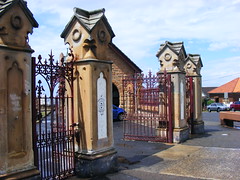 |
| Gates into Waverley Cemetery. |
Basically the job was to move five coffins in a crypt so it could be renovated. I had never been in a crypt before but had heard stories. People described them as dark, damp, dirty, small, boring and slippery. So I was actually rather excited and looking forward to it.
The day before we took the stretchers out of the transfer van and filled it with things we might need. Such as boards, ropes, torches and so on. Just a variety of things that might be handy if needed. I was put in the van and sent on a funeral first. This meant I had to bring a more 'practical' set of cloths as my three piece funeral suit would not be suitable for pulling coffins out of a crypt.
After the funeral I made my way over to Waverley Cemetery where the crypt was. As usual I was the first to arrive and so I had plenty of time to sit and eat my lunch. After all I would soon need my energy. I sat near the gate so that it was in sight but I was hidden. It was starting to turn into a miserable day, it was cold, overcast and looked like rain. Hardly the sort of weather we wanted.
Not too much later everyone else started to arrive and we made our way to the crypt. As they set up I changed into the more suitable work clothes. It had started to spit rain very lightly and then stopped, I remember one of the other undertakers commenting that he hopped the rain would keep away, even for a little bit.
When they had opened the door and set up we went inside to assess the situation. The job involved taking four adult coffins and one baby coffin off shelves and then taking them down one level into a room underneath the crypt. Unfortunately the door to the basement room under the crypt was directly infront of the door to the crypt itself and actually very small. It was not so much a 'door' as a small and steep hole with some stairs. Even better this hole was right in front of the door to the upper level. So we had to cover it up with boards to be able to get in and out of the upper level. Then we would have to uncover it to get to the bottom level.
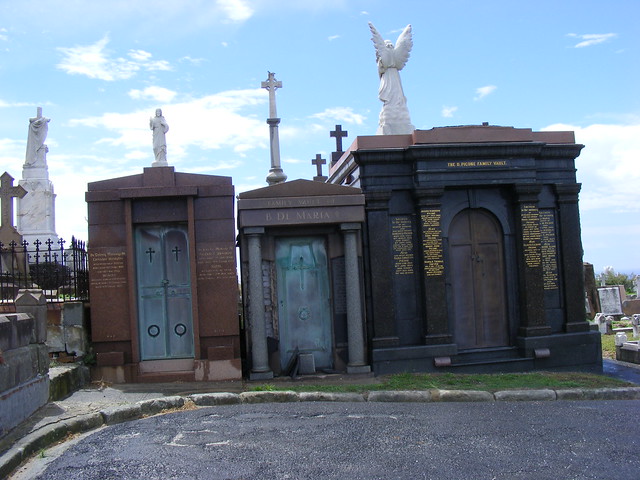 |
| Three crypts at Waverley, the one of the right is very similar to the one we worked out of. |
And there were only four of us. The grave diggers were not allowed to help due to OH&S issues. They obviously felt sorry for us and helped how they could, in fact a couple got quite actively involved. But they were council employees and council diggers cannot by law do certain things. Such as move coffins (like lowering or carrying them) and so on. All due to OH&S and insurance issues.
But what could we do? There were only four of us and the poor family had waited months for the job to be done. But our boss had been putting it off. And a family member was present through the job, he was obviously very upset at seeing his family being moved about but he was also extremely grateful.
We set to work and moved the two easiest coffins out first. I remember thinking how difficult it was, that these two coffins were so heavy and how little room there was. Little did I know that this would be the easiest part of the job. After taking the two coffins out we loaded them into the back of the van. Then we uncovered the hole to the bottom level and started to take the coffins down.
Here was the trouble, the hole was just big enough to fit the coffins and very step. We had to tie the coffin with rops, lower it foot first down the hole, then send the smaller person to squeeze between the coffin and the hole and direct it as the others continued to lower. Guess who was the 'smaller' person, me! I was to squeeze myself down the hole and direct the coffin until there was enough room for the others to come down and help me.
This is how we got the first coffin into the room. But then we had to get it on a shelf. Because of the lack of room and steepness of the hole we could barely raise the foot end of the coffin to get it onto the shelf. It kept getting caught on the walls, and with its heavy weight we had a lot of trouble. But we did it, the first two coffins were on the shelves and done.
Now it got hard. The next two coffins were bigger, heavier, had no handels and were higher. We lifted them up onto sticks while still on the shelves, then we tied ropes around them. Next I climbed up to the top shelf of the crypt (which had nothing on it except debris and dirt). I had to lie on this shelf as it was close to the roof and then take a rope to help swing the coffin out. So there I lay, in the dirt on a cold shelf in a crypt. All while swinging a heavy coffin down.
With a lot of trouble and effort we got the last two coffins out. But they were larger, so getting them down the hole was more difficult. I remember at one point another undertaker getting his pants caught on the coffin as he tried to squeeze past it to get down the hole. It was quite funny actually, seing him stuck there by his pants to a coffin! Even he thought it was funny. But then the supervisor reminded us that the family was watching and we had to stop giggling.
In the end we got the job done, but it was very dirty and a lot of work. When we finished the family member thanked us all personally, he was very grateful for the job and thought we had done well. And I had so much fun doing it, we all did. As difficult and dirty as it was it was also very rewarding and seing the job finished was so satisfying. I really enjoyed the day and the job with good people.
~~
2012-05-21
Working Funerals - Decomp
Decomp is short for 'decomposed'. It basically refers to what you think, a body that has gone 'off'. This is a briefe post the aspects of a decomp body and how to deal with them.
<> This post might be a bit much for some people, but I have avoided the details or anything graphic, and there are no pictures. There is nothing too bad in this post, but it does deal with a subject some find touchy or disgusting <>
There are many different stages to a 'decomp' body. But it basically comes down to the same thing. A body that has or is becoming 'ripe'.
How to spot a decomp:
The main ways to spot a decomp body (which is not hard):
Smell - decomp bodies will almost always have a certain "off" smell to them. This smell can be quite faint or it can be extremely strong. It is usually strongest on bodies that spent time (a few days or more) outside of a fridge. With bodies that decompose inside the fridge they tend not to smell too much. I would describe the smell as like rotted meat. Quite honestly it is a rather unlearnt smell with the power to penetrate through the body bag, fridge and into the mortuary. There is little point in me describing the smell as it escapes words, but it is instantly recognisable.
Colour - this is perhaps the easiest way to identify a decomp body. They will be going green or have turned green "like the Hulk" as one guy said. The 'greenness' starts in the stomach, this is where the body begins to decompose.
Texture - a decomp body will also become bloated, damp and 'loose'. The texture of the body is slippery and to be frank not very pleasant. The limbs will be loose as there is no rigor mortis at this point. The worst part is that the skin will feel damp and lose on the body.
Bugs & Fungus - the bugs on a body are usually maggots and other similar looking small white things. These bugs normally only start on bodies that have decomposed outside of a fridge. However when bodies sit in a fridge for a long time they get a strange fungus, either bright orange or pure white. But they do not get bugs.
Weight - decomp bodies generally weight noticeably more or less than other bodies. This is because they can bloat up and weigh more, especially if they decompose out of a fridge. On the other hand decomp bodies can weigh less than other bodies. They become smaller, there is less to them, this is especially the case with bodies which sit inside a fridge for too long.
How to deal with a decomp:
Take a deep breath - this might sound odd and go against all desires but it is by far the best thing to do. The smell is the worst thing about a decomp body, so getting rid of it makes everything else so much better and easier. The fastest way to get rid of it is to adapt to it, this is done by breathing in the smell. One or two deep and long breaths later the smell is nowhere near as strong. After a few more minutes the smell might be completely unnoticeable. Trying to keep the smell "out" of your nose will only make it last longer.
Poly bag - the main and best thing to do with decomp bodies is "poly bag them". 'Poly bag' is simply putting the body in a special bag then sealing the end with an iron. The bais made of a clear and mostly stiff plastic which is air and leak proof. This is the best thing to do with a decomp body, especially if there are bugs or fluids as it will keep in the bugs and fluids. However, while the poly bag does help reduce the smell it cannot completely contain or remove it in bad cases.
Open slowly - when opening a body bag which contains a decomp body always do so slowly and carefully. Quite often fluids will pool at the bottom of the bag and condensation will collect on the sides. So open and close the bag slowly to prevent splashing any fluids about.
Odour neutraliser - there are several products out there to reduce the smell of a body. One of the best according to the embalmer is a product called something like VM3. It is an all natural product which significantly reduces or completely removes smells. Further more it has no real odour of its own. Another great option is baking soda (aka sodium bicarbonate). Mix it with some water and it will make a great odour neutraliser.
Mints - eating a mint shortly before or while working with a decomp can make the job a little more pleasant. This will reduce what you smell and make everything slightly nicer.
Kerosene - putting kerosene on bodies with bugs is an old trick. The kerosene will kill most of the bugs overnight. It will even kill many of the bugs inside the body, not just the ones on the surface. This will not kill everything. Unfortunately this is something one can only do in the mortuary. On the transfer you will have to suffer the bugs as bug sprays will not kill the things inside the body.
Masks - some people wear masks when handeling decomp bodies. This can help, and more importantly it makes the whole adventure appear nicer or safer. However they do not actually make much difference in terms of safety or pleasantness.
Double glove - this is more a safety measure which can be used on transfers or in the mortuary, but with decomp bodies one should wear two gloves on each hand. Doing this not only makes it less likely for something to get through the gloves but also means that if the outside pair get 'dirty' you can take them off and still have gloves on.
Aprons - in the mortuary one should wear an apron when handeling a decomp body. This prevents any unwanted 'bits' getting on your person. Unfortunately this is rarely available or practical on transfers.
Things to watch for:
Skin slip - this is rather unpleasant. It is basically where the skin or flesh of the body slips as it is picked up or moved. It can happen with elderly bodies, however it is much more likely and much more unpleasant with decomp bodies. So watch how you hold these bodies.
Smell - the smell can almost literally hit you when you first encounter a decomp body. If going into a room or opening a bag that contains a decomp body prepare yourself for the smell. It can hit hard but will fade fast (especially if you let it in). The first few moments are the worst but after that it becomes better. The worst thing about the smell is how it can penetrate and cling. It can get through a body bag and a fridge then will stick to your cloths.
Bugs - they are very unpleasant. But there is little to nothing one can do to manage the bugs outside the mortuary. As with smell the best you can do is know about it ahead of time and mentally prepare yourself.
Fluids - this is exactly what it sounds like. Bodily and other fluids can pool and accumulate, especially in body bags. Be aware of this when dealing with decomp bodies.
Some last words:
In the end you can do what a lot to manage a decomp body. Yet it will never be a pleasant job and will often be difficult, physically and mentally. Decomp bodies can be heavy, they can be lose and there can be fluids. But in all honesty decomp bodies are not always as bad as they sound. Yes they can be extremely unpleasant but generally it is not too bad and often down to personal taste.
~~
<> This post might be a bit much for some people, but I have avoided the details or anything graphic, and there are no pictures. There is nothing too bad in this post, but it does deal with a subject some find touchy or disgusting <>
There are many different stages to a 'decomp' body. But it basically comes down to the same thing. A body that has or is becoming 'ripe'.
How to spot a decomp:
The main ways to spot a decomp body (which is not hard):
Smell - decomp bodies will almost always have a certain "off" smell to them. This smell can be quite faint or it can be extremely strong. It is usually strongest on bodies that spent time (a few days or more) outside of a fridge. With bodies that decompose inside the fridge they tend not to smell too much. I would describe the smell as like rotted meat. Quite honestly it is a rather unlearnt smell with the power to penetrate through the body bag, fridge and into the mortuary. There is little point in me describing the smell as it escapes words, but it is instantly recognisable.
Colour - this is perhaps the easiest way to identify a decomp body. They will be going green or have turned green "like the Hulk" as one guy said. The 'greenness' starts in the stomach, this is where the body begins to decompose.
Texture - a decomp body will also become bloated, damp and 'loose'. The texture of the body is slippery and to be frank not very pleasant. The limbs will be loose as there is no rigor mortis at this point. The worst part is that the skin will feel damp and lose on the body.
Bugs & Fungus - the bugs on a body are usually maggots and other similar looking small white things. These bugs normally only start on bodies that have decomposed outside of a fridge. However when bodies sit in a fridge for a long time they get a strange fungus, either bright orange or pure white. But they do not get bugs.
Weight - decomp bodies generally weight noticeably more or less than other bodies. This is because they can bloat up and weigh more, especially if they decompose out of a fridge. On the other hand decomp bodies can weigh less than other bodies. They become smaller, there is less to them, this is especially the case with bodies which sit inside a fridge for too long.
How to deal with a decomp:
Take a deep breath - this might sound odd and go against all desires but it is by far the best thing to do. The smell is the worst thing about a decomp body, so getting rid of it makes everything else so much better and easier. The fastest way to get rid of it is to adapt to it, this is done by breathing in the smell. One or two deep and long breaths later the smell is nowhere near as strong. After a few more minutes the smell might be completely unnoticeable. Trying to keep the smell "out" of your nose will only make it last longer.
Poly bag - the main and best thing to do with decomp bodies is "poly bag them". 'Poly bag' is simply putting the body in a special bag then sealing the end with an iron. The bais made of a clear and mostly stiff plastic which is air and leak proof. This is the best thing to do with a decomp body, especially if there are bugs or fluids as it will keep in the bugs and fluids. However, while the poly bag does help reduce the smell it cannot completely contain or remove it in bad cases.
Open slowly - when opening a body bag which contains a decomp body always do so slowly and carefully. Quite often fluids will pool at the bottom of the bag and condensation will collect on the sides. So open and close the bag slowly to prevent splashing any fluids about.
Odour neutraliser - there are several products out there to reduce the smell of a body. One of the best according to the embalmer is a product called something like VM3. It is an all natural product which significantly reduces or completely removes smells. Further more it has no real odour of its own. Another great option is baking soda (aka sodium bicarbonate). Mix it with some water and it will make a great odour neutraliser.
Mints - eating a mint shortly before or while working with a decomp can make the job a little more pleasant. This will reduce what you smell and make everything slightly nicer.
Kerosene - putting kerosene on bodies with bugs is an old trick. The kerosene will kill most of the bugs overnight. It will even kill many of the bugs inside the body, not just the ones on the surface. This will not kill everything. Unfortunately this is something one can only do in the mortuary. On the transfer you will have to suffer the bugs as bug sprays will not kill the things inside the body.
Masks - some people wear masks when handeling decomp bodies. This can help, and more importantly it makes the whole adventure appear nicer or safer. However they do not actually make much difference in terms of safety or pleasantness.
Double glove - this is more a safety measure which can be used on transfers or in the mortuary, but with decomp bodies one should wear two gloves on each hand. Doing this not only makes it less likely for something to get through the gloves but also means that if the outside pair get 'dirty' you can take them off and still have gloves on.
Aprons - in the mortuary one should wear an apron when handeling a decomp body. This prevents any unwanted 'bits' getting on your person. Unfortunately this is rarely available or practical on transfers.
Things to watch for:
Skin slip - this is rather unpleasant. It is basically where the skin or flesh of the body slips as it is picked up or moved. It can happen with elderly bodies, however it is much more likely and much more unpleasant with decomp bodies. So watch how you hold these bodies.
Smell - the smell can almost literally hit you when you first encounter a decomp body. If going into a room or opening a bag that contains a decomp body prepare yourself for the smell. It can hit hard but will fade fast (especially if you let it in). The first few moments are the worst but after that it becomes better. The worst thing about the smell is how it can penetrate and cling. It can get through a body bag and a fridge then will stick to your cloths.
Bugs - they are very unpleasant. But there is little to nothing one can do to manage the bugs outside the mortuary. As with smell the best you can do is know about it ahead of time and mentally prepare yourself.
Fluids - this is exactly what it sounds like. Bodily and other fluids can pool and accumulate, especially in body bags. Be aware of this when dealing with decomp bodies.
Some last words:
In the end you can do what a lot to manage a decomp body. Yet it will never be a pleasant job and will often be difficult, physically and mentally. Decomp bodies can be heavy, they can be lose and there can be fluids. But in all honesty decomp bodies are not always as bad as they sound. Yes they can be extremely unpleasant but generally it is not too bad and often down to personal taste.
~~
2012-05-01
Working Funerals - Turning the coffin
At my grandfathers funeral I couldn't help but notice the mistakes the undertakers made when turning the coffin. The mistakes wren't serious or disrespectful and they went un-noticed to the other mourners. But after working funerals I saw these little mistakes. And this made me realise how many mistakes can be made when turning the coffin, so I thought a little guide might help.
Turning the coffin is a rather important part of the service, and it is a part many overlook or dismiss. It is also a rather simple procedure that has plenty of room for errors.
'Turning the' coffin refers to the act of rotating the coffin at the end of a funeral service to take it to the next or final stage. This is done while family, friends or other mourners are watching and is a part of the service itself. Mourners or staff can turn the coffin, but it is usually the undertakers who do it.
Any movement of the coffin is important and potentially emotional for most mourners. So turning the coffin is very significant for most people. It is also done infront of many people and its always watched intently. As such it should always be done right. Thus an article explaining how to turn the coffin could be helpful to mourners or funeral directors alike.
Here is my step by step guid on how to properly turn a coffin:
Just remember not to worry too much about it and if you are unsure of what to do don't do anything. A great rule for funerals is do nothing if you are unsure. It is much better to do nothing than do something wrong. When turning the coffin generally wait to see what the hearse driver or conductor are doing before you act. And if you are the hearse driver or conductor you should know what you are doing and not really need this guide.
~~
Turning the coffin is a rather important part of the service, and it is a part many overlook or dismiss. It is also a rather simple procedure that has plenty of room for errors.
'Turning the' coffin refers to the act of rotating the coffin at the end of a funeral service to take it to the next or final stage. This is done while family, friends or other mourners are watching and is a part of the service itself. Mourners or staff can turn the coffin, but it is usually the undertakers who do it.
Any movement of the coffin is important and potentially emotional for most mourners. So turning the coffin is very significant for most people. It is also done infront of many people and its always watched intently. As such it should always be done right. Thus an article explaining how to turn the coffin could be helpful to mourners or funeral directors alike.
Here is my step by step guid on how to properly turn a coffin:
 |
| Fig1. Getting into position. |
1. The hearse driver and other staff member will wait near the coffin before moving over and preparing it. This involves removing any symbols (items placed on top or near the coffin) or obstructions (such as the pascal candle or tables). As they approach they should bow to the stage or coffin depending on tradition or practice.
 |
| Fig2. Getting ready to turn. |
2. The staff move into position, the hearse driver goes to the head end and the other staff member goes to the foot end.
3. They pause for a moment and when the hearse driver signals they place their hands on the coffin.
4. The staff want to have a firm but dignified hold of the coffin. It should not be grabbed and moved like a box or furniture but it does need a firm grasp to keep control.
5. After placing their hands on the coffin the staff pause and again wait for the hearse drivers signal.
 |
| Fig 3. Turning the coffin. |
6. When the hearse driver signals the staff turn the coffin clockwise. It must always be turned clockwise! Turning the coffin in this direction represents the passage of time, it is an old and symbolic tradition.
7. It might be necessary to perform a three-point-turn in tight spaces. There is nothing wrong with this if movements are kept to a minimum where possible. Be sure to discuss this with the conductor or hearse driver before going up to turn.
 |
| Fig 4. Finishing the turn. |
8. The assisting staff at the foot end should make sure the coffin is straight. To do this they pull the coffin down the isle towards them a very short distance. Never pull the coffin too far in this direction and do not worry about getting the coffin perfectly straight.
9. The staff will move off as previously instructed by the conductor.
Some simple key things to remember are:
- Pause after approaching the coffin, pause again after placing your hands on it and make a final pause after turning the coffin. This makes the whole thing appear much more respectful and professional.
- Look for the hearse drivers signals, move when they move and move as they move. Again, it will look professional and like you are a team.
- Do not move too far. Restrict all movements as much as is practical otherwise mistakes can be made.
- Flow steadily, do not move suddenly or jerkily. Think of the process as like a dance, move with a rhythm and do not make sudden or unexpected movements.
- If a mistake is made ignore it if you can. Most mourners will not notice mistakes unless the undertakers make them noticeable. So if you can get away with a mistake then do so.
- Know the crew and other staff. This is difficult with large companies who change crews and staff often. But if you can get to know them do so. It really helped me, to know how and when each hearse driver liked to turn the coffin. Then I could match their styles and appear more professional and I would notice quicker if something went wrong. We all have our personal tastes and touches, getting to know these will go a long way.
- Communicate! This is perhaps the best and most important thing. Listen to the conductor and hearse driver. Do no over discuss what is to happen but make sure everyone is on the same page and you know not only your role but what others are meant to do. This means if something goes wrong or someone goes missing you can easily step in.
Just remember not to worry too much about it and if you are unsure of what to do don't do anything. A great rule for funerals is do nothing if you are unsure. It is much better to do nothing than do something wrong. When turning the coffin generally wait to see what the hearse driver or conductor are doing before you act. And if you are the hearse driver or conductor you should know what you are doing and not really need this guide.
~~
Subscribe to:
Posts (Atom)